 Skip to content
October 1, 2026
Video Surveillance for Business at a Glance
Video surveillance for business is a professionally designed camera system that lets an organization monitor its property, review recorded footage, and coordinate incident response from one centralized platform. A commercial video surveillance system combines four core parts: cameras that capture footage, recording hardware that ingests it, storage and backup that retain it, and video management software that controls it all. It can also integrate with access control and alarms, giving security teams unified visibility instead of isolated feeds. The right design depends on how each facility operates, from a single building to multiple remote sites.
Main Takeaway: A strong commercial video surveillance system depends less on the number of cameras than on how well cameras, recording, storage, and software work together and connect to the rest of your security. Cobalt FTS designs and installs High Definition Network Video Recording systems with camera resolutions up to 61 megapixels, integrates surveillance with access control for real-time verification, and supports every deployment with an in-house technical team.
Choosing video surveillance for business is no longer about pointing a few cameras at the front door. Modern surveillance technology extends your security team, letting you view any area of your property through one centralized, easy-to-use platform. Whether you operate a single facility or several remote locations, the questions that matter most are practical: which cameras suit each space, how to record and store footage, who needs remote access, and how the system will grow with the organization.
This guide walks through those decisions in order. It explains the core components of a business camera system, compares camera types, weighs cloud-based video surveillance against traditional recording, and covers remote viewing, scaling, and working with a professional integrator.
Explore the full range of security systems for businesses that Cobalt FTS designs, installs, and supports.
Why Video Security Has Become a Business-Critical Investment
Video security has moved from a passive record-keeping tool to an active part of daily operations. A professionally designed camera system helps a business reduce fraud, deter employee theft, and safeguard against costly litigation, protecting people, property, and the bottom line at the same time. Just as important, it gives leadership genuine visibility: the ability to see what is happening across a property rather than reconstructing events after the fact.
Protecting People, Assets, and Revenue
The financial case for business video surveillance is direct. A professionally designed camera system helps reduce fraud, deter employee theft, and safeguard against costly litigation, three risks that quietly erode profitability in commercial environments. Deterrence matters as much as detection: visible, well-placed cameras discourage behavior before it happens, while recorded footage protects the organization when a dispute or claim arises. That combination of prevention and evidence is what makes video a practical safeguard for a business, not just a security expense.
From single sites to distributed operations
As organizations add buildings, campuses, or operating sites, separate camera systems can limit visibility instead of expanding it. When surveillance stays siloed by location, teams lose time moving between disconnected interfaces. Bringing video into a connected platform gives security staff a more complete picture of activity across the organization and faster access to footage when an incident occurs.
Verification that speeds up response
Video also changes how alerts are handled. With video verification, your team or a monitoring center can immediately confirm what triggered an alert, which leads to faster response and fewer false dispatches. That single capability, confirming an event visually before acting, is one of the clearest reasons video has become foundational to commercial security rather than an optional add-on.
A record that supports investigations and operations
Beyond real-time response, recorded footage carries lasting value. It can assist in incident investigations, loss prevention efforts, and compliance documentation, and it lets managers review operational workflows rather than only security events. In practice, a camera system becomes a shared source of truth: the same footage that resolves a security incident can also clarify an operational question, which is part of why organizations treat video as core infrastructure rather than a standalone tool.
Understand how surveillance strengthens a broader program with integrated security systems.
Core Components of a Commercial Video Surveillance System: Cameras, Recording, Storage, and Software
Every commercial video surveillance system rests on four working parts: cameras that capture footage, recording hardware that ingests it, storage that retains it, and software that ties everything together. Understanding each part makes it far easier to specify a system that matches how a facility operates.
Cameras and high-resolution capture
Cameras are the eyes of the system, and resolution determines how much usable detail you keep. Cobalt FTS designs and installs High-Definition Network Video Recording systems with camera resolutions up to an incredible 61 megapixels, supporting wide coverage and the ability to zoom in after the fact without losing clarity.
Recording, storage, and backup
Footage has to be captured reliably and kept safe. Secure storage solutions, including cloud and hybrid on-site/cloud backups, ensure footage is safely retained and accessible when needed, and automatic backups protect against data loss. The recording and storage strategy is where retention needs, budget, and risk tolerance all meet.
Video Management Software (VMS)
The Video Management System is the control layer. Central software controls camera feeds, recordings, playback, and device settings through a user-friendly interface, supporting multiple devices and locations. A capable VMS is what turns a collection of cameras into a system a small team can actually operate.
How the pieces work as one system
These four parts are only as strong as their connections. A modern system can bring cameras, alarms, and access control into a single platform, making monitoring and incident response more manageable and supporting swift video searches when an event needs to be found quickly. When the components are specified together rather than bolted on over time, the result is clearer video, real-time alerts, and remote access to security data from virtually any location- the practical payoff of treating the four elements as one coordinated design.
| Component | What it does | What to decide |
| Cameras | Capture footage, up to 61 MP resolution | Coverage areas, resolution, low-light needs |
| Recording | Ingests and writes video (HD network video recording) | On-site, cloud, or hybrid |
| Storage & backup | Retains footage; cloud/hybrid with automatic backups | Retention length and redundancy |
| VMS software | Controls feeds, playback, settings across sites | Ease of use, multi-site support |
Modernizing older equipment? Cobalt FTS handles commercial security system upgrades.
Camera Types and Capabilities Explained: IP, PTZ, Multisensor, Thermal, and AI-Enabled
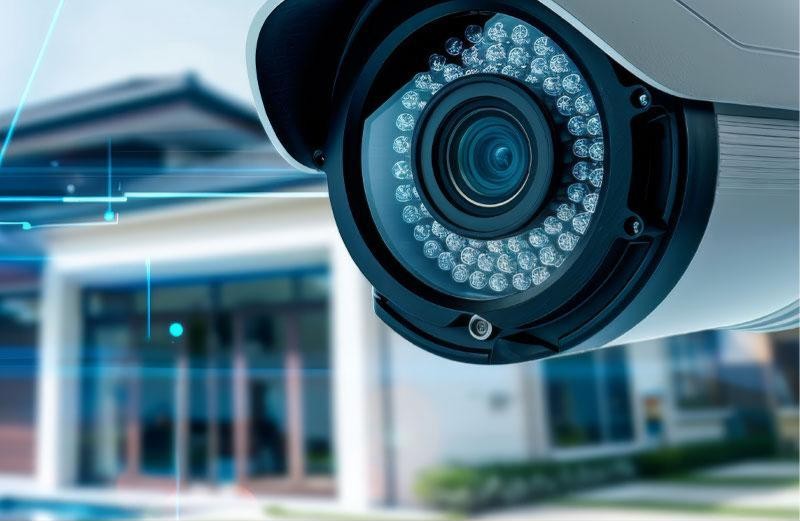
No single camera suits every space. Matching camera capability to the environment is what removes blind spots and keeps footage useful. Cobalt FTS selects and places the ideal cameras for each spot to ensure reliable coverage, and several capabilities matter most when specifying a business camera system.
Adapting to light and environment
Difficult lighting is one of the most common reasons footage disappoints. Cameras with infrared, thermal, or wide dynamic range features capture footage in challenging lighting and environments, enabling reliable low-light and outdoor monitoring.
Purpose-built capture
Some cameras are chosen for a specific job. License plate recognition cameras positioned at main entry and exit areas capture plates accurately in any lighting or speed conditions and connect with gate operators, parking systems, and investigations. Wide-angle solutions designed for fields, courts, and stadium environments cover large open areas. Supplemental cameras eliminate blind spots and improve visibility in new or under-covered areas.
Placement decisions shape the entire system’s effectiveness. 9 camera placement mistakes that leave your business blind covers the most common errors and how to catch them before they become gaps.
AI-enabled cameras and analytics
The biggest shift is intelligence at the camera. AI-driven systems use machine learning to detect specific movements or threats such as loitering or perimeter breaches, reducing false alarms and allowing customizable alerts. Analytics can recognize people, objects, and unusual behavior such as lingering or crossing defined zones, turning cameras from passive recorders into active security tools.
- Infrared/thermal / WDR cameras — reliable capture in low light and harsh environments.
- License plate recognition — accurate plate capture tied to gates, parking, and investigations.
- Wide-angle/area cameras — coverage for fields, courts, and large open spaces.
- AI-enabled cameras — object and behavior detection with customizable, lower-noise alerts.
From passive recorders to active tools
Analytics change what a camera does in practice. Instead of simply recording for later review, an AI-enabled camera tracks activity in real time and flags potential risks and operational issues without constant human monitoring. Event-based coverage can automatically send alerts and capture footage the moment something happens, such as after-hours entry into a restricted area, so staff can respond immediately rather than discovering the event later. For business video surveillance deployments, this is often the most valuable upgrade because it turns a large number of cameras into a manageable stream of meaningful alerts.
Explore AI-driven detection and analytics across our video surveillance systems.
Cloud-Based Video Surveillance System vs. Traditional Recording Architectures
One defining choice in any deployment is where video lives and how it is managed. A cloud-based video surveillance system stores and manages surveillance through secure cloud platforms, letting organizations view live footage, review recorded video, and manage camera activity through a centralized environment. Traditional architectures keep recording and management on local hardware at each site.
What the cloud model changes
Cloud-based security systems bring access activity, video feeds, and alert data into one place, which makes it easier for teams to monitor conditions, review incidents, and respond with better coordination. Many commercial environments no longer rely only on local servers and isolated hardware, because connected systems support faster review and consistent visibility across buildings. Cloud-based video surveillance helps investigate incidents faster and maintain broader awareness, and for organizations with several buildings, remote access to video can improve response time.
Why teams are moving toward connected recording
The shift is driven by how security teams actually work. They often manage multiple doors, camera streams, credentials, and alerts at the same time, and a centralized platform helps organize those functions so staff can review activity through one interface instead of separate systems in separate locations. A connected structure can reduce delays in reviewing incidents, updating permissions, or tracking unusual activity across several sites, which is precisely where isolated local hardware tends to slow a team down.
Where each approach fits
The decision is rarely all-or-nothing. Secure storage can include cloud and hybrid on-site/cloud backups, so many facilities combine local recording with cloud access and redundancy. The right balance depends on bandwidth, budget, and how a team wants to review footage day to day, a trade-off explored in detail in cloud video surveillance vs. on-premise NVR: which recording architecture fits your business.
Explore centralized, cloud-connected oversight with Cobalt FTS cloud based security systems.

Remote Viewing, Mobile Access, and Real-Time Alerting for Business Owners
Accessing your cameras from anywhere is one of the most valuable features of a modern commercial camera system. With authorized access, users can view cameras, receive alerts, and manage security settings remotely through secure dashboards, mobile apps, or web portals. That flexibility means a manager can check a site after hours, or a security lead can confirm an event before deciding how to respond.
Alerts that prioritize what matters
Real-time alerting is only useful if it filters noise. AI-driven alerts detect specific movements or threats and reduce false alarms while allowing customizable alerts, so teams are notified about genuine events rather than routine activity. Event-based systems can automatically send alerts and capture footage the moment something happens, allowing staff to respond immediately.
Two-way awareness at the door
Remote access also extends to entry points. A video intercom system integrates visual verification, two-way communication, and door control in one platform, so you can see and speak with visitors, confirm who they are, and grant entry from a smartphone or workstation. It is remote viewing applied directly to access decisions.
Bringing feeds together in a command center
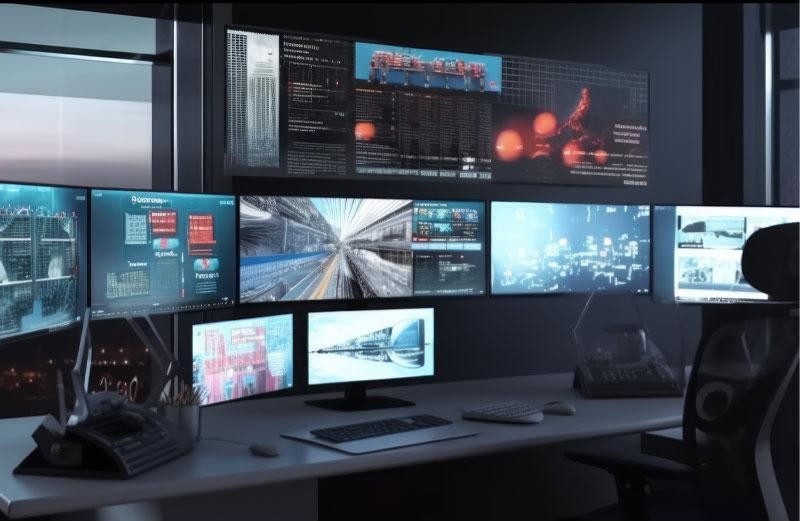
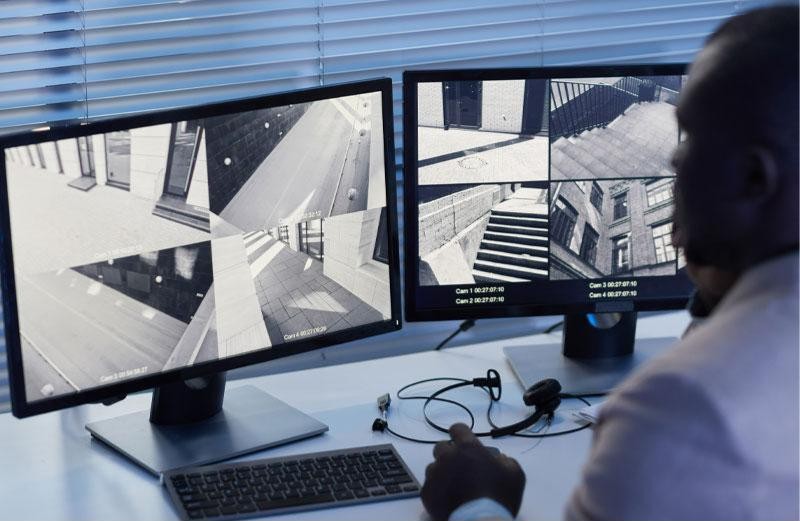
For larger operations, remote and on-site viewing come together in a command center that brings live security video, access records, and urgent alerts into one place. Whether the need ranges from expansive video display walls to efficient multi-screen desks, the aim is an easy-to-use setup with practical interfaces that let staff react swiftly and effectively. This is where the value of video surveillance for business becomes concrete: many streams, from many places, reduced to a single view a team can act on.
See how security monitoring systems keep watch over your facility around the clock.
Scaling a Video Surveillance System for Business Growth: Bandwidth, Storage, and Licensing Considerations
A system worth investing in should grow with the organization. Well-designed commercial systems can expand with business needs, adding cameras and advanced features over time, and integration with related security systems enhances overall protection as the footprint grows. Planning for that growth up front avoids costly rework later.
Storage and coverage as you add cameras
Every camera you add consumes storage and needs somewhere to record. Because secure storage can be delivered through cloud and hybrid on-site/cloud backups, the storage plan can flex as cameras are added, and you can introduce supplemental cameras to close blind spots or secure a new area without rebuilding the system.
Higher resolution changes this math too. Systems built with camera resolutions up to 61 megapixels capture far more detail, which is valuable for investigations but also increases what each camera writes to storage. Planning retention and backup around the resolution you actually need, rather than defaulting to the maximum everywhere, is a practical way to keep a growing commercial camera system both useful and cost-effective. Automatic backups then protect that footage against data loss as the system scales.
Scaling across multiple sites
Growth often means more locations, not just more cameras. Multi-site video surveillance helps security teams review live and recorded activity across several locations through one platform, giving faster access to footage and a more complete picture across the organization. A centralized dashboard also lets teams apply the same security standards across all facilities, which keeps a growing system consistent and manageable.
Growing without replacing everything
Expansion does not always mean starting over. Organizations can upgrade existing security platforms to support centralized monitoring and better response coordination. Modern upgrades often add high-definition surveillance, credential management, license plate recognition, and AI-enabled analytics on top of compatible infrastructure. Each project begins with an evaluation of current equipment, monitoring requirements, and operational workflows, so facilities can maintain existing investments while introducing new capabilities as needs change.
This is where Cobalt FTS stands apart. The same in-house team designs, installs, and maintains every system, so one accountable partner manages your growth from the first assessment through long-term support. Cobalt FTS also specializes in cost-effective upgrades that often reuse existing cabling and infrastructure, which keeps expansion practical instead of disruptive.
Scaling to new locations? See how Cobalt FTS centralizes oversight with multi site security systems.
Working With a Professional Integrator: Design, Installation, and Ongoing Support
The difference between a camera purchase and a working security program is the integrator behind it. Cobalt FTS designs and installs complete commercial security systems from the ground up, including access control, video surveillance, and intrusion detection, so every component works together from day one, with an in-house team handling the full installation from initial site assessment to final walkthrough.
Cobalt FTS provides commercial security system design, installation, and maintenance to schools, healthcare facilities, and defense contractors across North Texas.
Support that continues after installation
A camera system needs care to stay reliable. Ongoing maintenance and support include regular inspections, fast repairs, and ready access to an in-house technical team, keeping commercial security solutions performing reliably long after installation. Typical servicing includes inspection and testing of CCTV cameras and recording systems, diagnostics and repair for malfunctioning devices, and firmware updates and configuration verification.
Design built around your environment
Good design starts with the facility, not the hardware. Every enhancement Cobalt FTS makes is tailored to your current setup and adapts to evolving requirements, and systems are built to integrate seamlessly with your existing access control system for a comprehensive, unified approach. That is what keeps in-house expertise, not outsourced labor, accountable across the life of the system.
Why maintenance protects the investment
A camera system is made of interconnected devices and software, and when any component fails or has configuration errors, monitoring capabilities weaken. Structured maintenance prevents this: routine servicing typically includes system diagnostics, firmware updates, device testing, and verification of monitoring connections, along with confirming communication between integrated components. For any video surveillance for business deployment, this ongoing attention preserves reliable detection and response long after the cameras go live, and the same in-house team that designed and installed the system delivers it.
Start with expert business security system installation that handles design through final walkthrough.
How to Evaluate Vendors and Build Your Video Surveillance Roadmap
Choosing a provider ultimately comes down to accountability and fit. The strongest signal is a provider that handles design, installation, and support in-house rather than outsourcing, so one team stays responsible from planning through long-term service. Cobalt FTS has served North Texas since 1998 with its own technical team managing every stage, which gives clients faster response times and a single point of accountability.
What to weigh when comparing systems
A useful evaluation looks beyond camera count and focuses on how a system will perform and scale. The criteria that matter most:
- Coverage quality over quantity: Good systems place cameras for each specific area and match resolution to the detail you need, rather than simply adding more units.
- Integration: Video should tie into your existing access control and alarms so the team gains unified visibility instead of isolated feeds.
- Storage and backup fit: On-site, cloud, or hybrid recording each suits different needs, so the right choice depends on your retention and redundancy requirements.
- Room to scale: Look for a system that lets you add cameras, analytics, and new locations on one centralized platform without forcing a rebuild.
- Accountability and support: One in-house team owning design, installation, and maintenance gives you a single point of contact instead of a chain of subcontractors.
Signs it is time to modernize
Vendor selection often begins when an existing system falls behind. Facilities that rely on outdated cameras, disconnected alarm systems, or aging access control hardware often experience operational gaps that reduce monitoring visibility and make incident response harder. Recognizing those gaps is useful when comparing providers, because the right partner should be able to modernize without forcing a full rip-and-replace. A capable integrator will introduce clearer video, real-time alerts, and remote access while preserving compatible infrastructure, so upgrading video surveillance for business becomes a planned improvement rather than a disruptive overhaul.
Building your roadmap
A practical roadmap starts with a site assessment, prioritizes the coverage that reduces the most risk, and phases in analytics and additional locations over time. Because Cobalt FTS specializes in cost-effective upgrades that often reuse existing cabling and infrastructure, an older system is rarely a reason to delay.
A unified system starts with commercial access control systems that integrate with your cameras. Explore the options and request a free assessment.
Strong video surveillance for business is never really about the cameras alone. It is about how coverage, recording, storage, and software work together, integrate with the rest of your security, and grow with your organization over time. Getting those decisions right is what separates a system that simply records from one that genuinely protects people, assets, and daily operations. The right integrator makes that difference, handling design, installation, and long-term support so the system keeps performing well after it goes live. When you are ready to build or upgrade a system designed around how your facility actually works, Contact Cobalt FTS for a site assessment and a right-sized plan
Frequently Asked Questions
Is a cloud-based video surveillance system better than on-site recording?
Neither is universally better. Cloud platforms centralize video, access, and alerts for faster remote review, while many facilities use hybrid on-site/cloud backups for redundancy. The right mix depends on bandwidth, budget, and how your team reviews footage.
Can I view all my locations from one place?
Yes. Multi-site video surveillance lets teams review live and recorded activity across several locations through one centralized dashboard, so footage and standards stay consistent across every facility.
Do I have to replace my old cameras to upgrade?
Often not. Cobalt FTS specializes in cost-effective upgrades that frequently reuse existing cabling or infrastructure, modernizing cameras and video management tools while fine-tuning coverage.
How does video surveillance reduce false alarms?
AI-driven analytics detect specific movements or threats and filter routine activity, and video verification lets a team confirm what triggered an alert before responding, which reduces unnecessary dispatches.
What ongoing support does a camera system need?
Regular inspections, fast repairs, firmware updates, and testing of cameras and recording systems keep a system reliable. Cobalt FTS provides this through its in-house technical team as part of ongoing maintenance and support.

Recent Insights
-
October 1, 2026
It is tempting to think that more cameras mean more [...]
October 1, 2026
Every commercial camera system must record and store footage somewhere, [...]

August 12, 2026
Defense contractor security compliance goes beyond standard commercial security because [...]


