Skip to content
Monitored Commercial Alarms vs Integrated Security Systems: Which Is Right for Your Business?
June 20, 2026
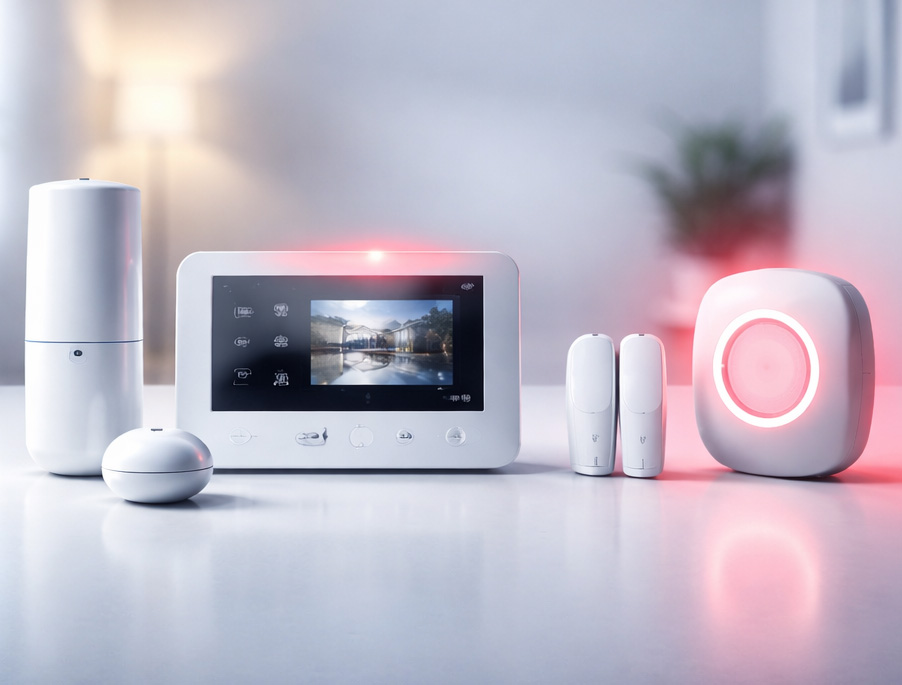
Facility security directors and procurement officers face a recurring architectural decision: deploy standalone monitored alarm systems for businesses, or invest in a unified platform that correlates data across every security layer. Neither option is universally correct, and choosing the wrong architecture carries meaningful operational risk.
Monitored commercial alarm systems detect breaches and relay alerts to a central station, where human operators initiate response. Integrated security systems, by contrast, unify access control, video surveillance, and intrusion detection into a single correlated environment. The gap between these approaches widens considerably as facility complexity grows.
This comparison of security alarm systems is designed to help operations directors and procurement teams evaluate both options against real facility constraints, not marketing claims.
Which Security Alarm Systems Offer Better Incident Response?
Traditional monitored alarm systems for businesses depend on sequential verification: a sensor triggers, a signal transmits, and a monitoring agent manually confirms before dispatching responders. That sequence introduces latency that integrated platforms structurally eliminate.
Integrated security systems correlate a door-breach event with a simultaneous camera feed, producing a verified alert without human intermediation. The result is materially faster threat confirmation and a lower rate of unnecessary emergency dispatches. For facilities managing high-traffic entry points or sensitive asset zones, that speed differential carries direct operational consequence.
Monitored commercial alarm systems remain reliable for lower-complexity environments where sequential verification is acceptable. However, when threat neutralization speed is a primary procurement criterion, integrated platforms consistently outperform standalone monitoring architectures on incident response quality.
How Do Security Alarm Systems Compare on Lifecycle Maintenance?
Siloed commercial alarm systems require separate maintenance schedules for each subsystem, creating disjointed firmware update cycles, inconsistent health-check cadences, and higher cumulative labor demand. Administrators managing multiple vendors across a single facility often encounter gaps where silent failures go undetected until an incident exposes them.
Integrated security systems consolidate health monitoring into a centralized dashboard, allowing a single administrator to review device status, flag anomalies, and push updates across the entire ecosystem. That consolidation reduces maintenance overhead and meaningfully lowers the risk of undetected equipment degradation.
The lifecycle cost posture differs accordingly. Monitored commercial alarm systems carry lower upfront capital intensity but accumulate higher operating drag over time through fragmented vendor relationships and reactive maintenance patterns. Integrated platforms demand heavier initial investment but deliver a more predictable, lower-friction maintenance trajectory across the asset lifecycle.
Which Security Alarm Systems Are Right for Your Operations?
Facilities operating under complex compliance mandates, multi-site footprints, or high-consequence asset environments benefit most from integrated security architectures. The ability to enforce consistent access policies, generate unified audit trails, and correlate events across subsystems directly supports regulatory defensibility that siloed security alarm systems cannot match.
Smaller facilities with limited entry points and straightforward monitoring requirements can function adequately with monitored commercial alarm systems, particularly during early operational phases before scaling demands emerge. The lower deployment friction and reduced capital commitment make standalone monitoring a rational starting point for constrained budgets.
The procurement decision ultimately hinges on three operational variables: facility complexity, compliance exposure, and response-speed requirements. Buyers evaluating both options should request a tailored site assessment to map their specific risk profile against each architecture’s capability ceiling before committing to either path.