Skip to content
In-House Security Integrators vs Subcontracted Providers: Which Is Safer?
August 11, 2026
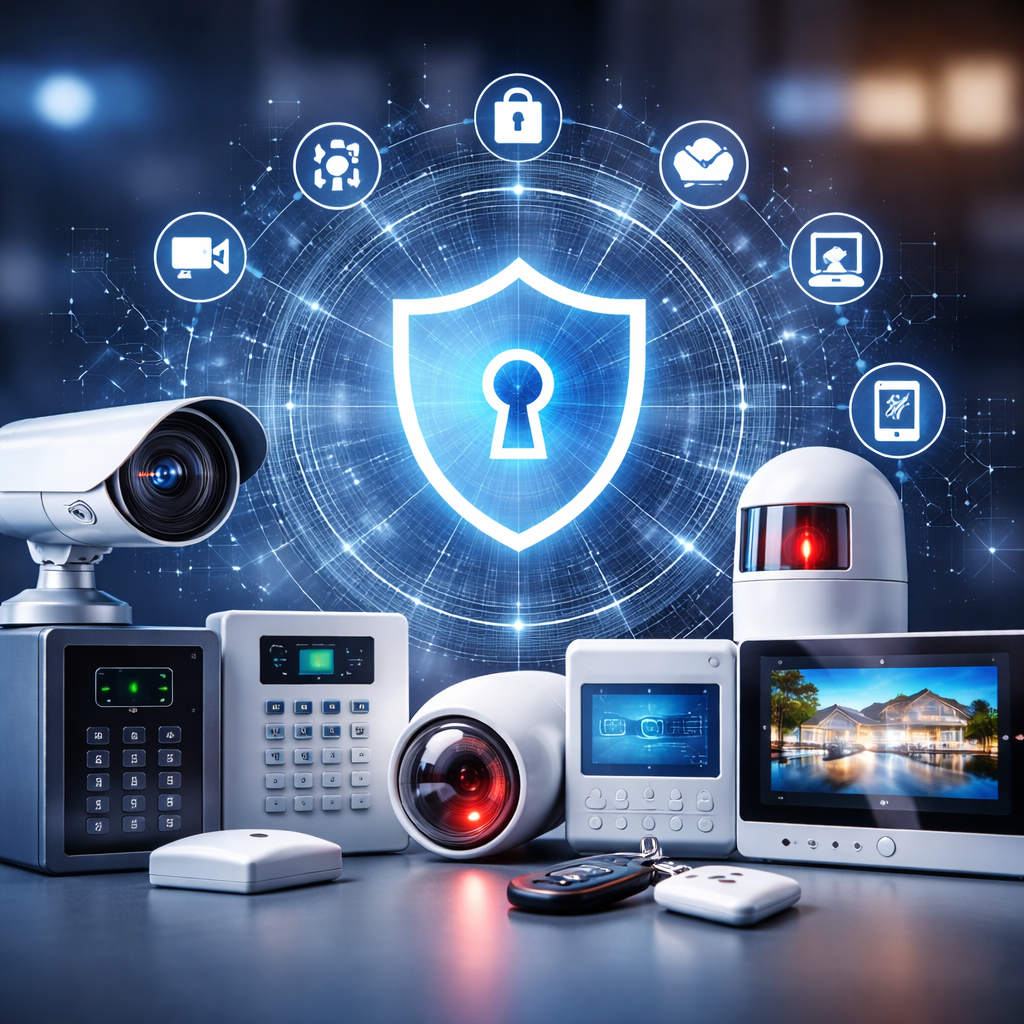
Choosing a security integrator comparison usually comes down to one question a business rarely asks upfront: who actually shows up when something goes wrong. The in-house vs outsourced security service decision shapes everything from response time to accountability, yet most buyers focus on price and equipment brand instead. Here is how the two models actually differ, and why it matters more than most contracts make clear.
What an in-house security integrator provides
An in-house integrator employs its own technicians directly, handling design, installation, and ongoing maintenance without routing the work through a third party. That means one company is responsible for the system from the initial site visit through every service call afterward. If a camera goes down or an access panel malfunctions, the same organization that installed the system sends someone to fix it, using staff who are familiar with that specific build.
What subcontracted commercial security vendors provide
A subcontracted model looks different. The company a business signs a contract with is not necessarily the one installing or servicing the equipment. Instead, that work gets routed to a local subcontractor, who may or may not have been involved in the original design. This structure can lower costs for the vendor, but it introduces a hand-off every time something needs attention, and accountability gets split between two organizations instead of one.
Response time and accountability
When a single company owns installation and service, there is no ambiguity about who to call and no delay while a subcontractor gets scheduled and briefed on a system they did not build. In-house teams typically know the specific configuration of a facility because they installed it, which shortens diagnosis time when something fails. Subcontracted arrangements add a layer of coordination between the vendor and the technician actually walking through the door, which can slow down resolution during an active incident.
Quality control and technician expertise
An in-house integrator can train its technicians on the exact platforms it sells and standardize how installations are handled across every project. A subcontracted model depends on the training and consistency of whichever local contractor happens to be assigned, which can vary significantly from one job to the next, even under the same vendor’s name. For a business trying to evaluate commercial security vendors, this is one of the harder details to verify from a sales conversation alone, since subcontracting arrangements are rarely advertised upfront.
Asking directly whether a technician works for the company or for a third party is usually the fastest way to surface this. A vendor confident in its own staffing model will typically answer without hesitation, while a vague or evasive response is itself a useful signal about how that provider actually operates day to day.
Cost considerations
Subcontracted models can sometimes offer a lower upfront quote, since the vendor is not carrying the overhead of a full-time technical staff. That savings does not always hold up over the life of a contract, particularly if service calls take longer to schedule or require repeat visits because the technician on-site was not involved in the original design. In-house pricing tends to reflect the full cost of ownership more transparently, since maintenance and support come from the same team responsible for the original installation.
Which model matters more for regulated industries
For businesses in healthcare, education, government, or defense-adjacent work, the stakes around accountability are higher. These industries often need documented, auditable service history, and a single point of responsibility makes that far easier to produce than a chain of subcontractors with separate service logs. An in-house model also tends to hold up better for facilities working through a compliance audit, since a single company can speak directly to how a system was designed, installed, and maintained, without needing to track down records from a third party that may no longer be under contract.
Where Cobalt FTS fits into this comparison
Cobalt FTS operates on the in-house model directly, designing, installing, and maintaining systems through its own team of company technicians rather than subcontracting the work. The company describes this as delivering end-to-end solutions without outsourcing, serving healthcare, Department of Defense, education, and manufacturing organizations across North Texas since 1998. For a business weighing an in-house vs outsourced security service decision, that structure means the same team that designs a system is the one a business calls years later when something needs attention, rather than a subcontractor who may no longer be under contract with the original vendor.
Call Cobalt FTS at (972) 792-7793 to ask how their in-house team handles service after installation.