Skip to content
Why Defense Contractors Require Specialized Security Compliance
August 12, 2026
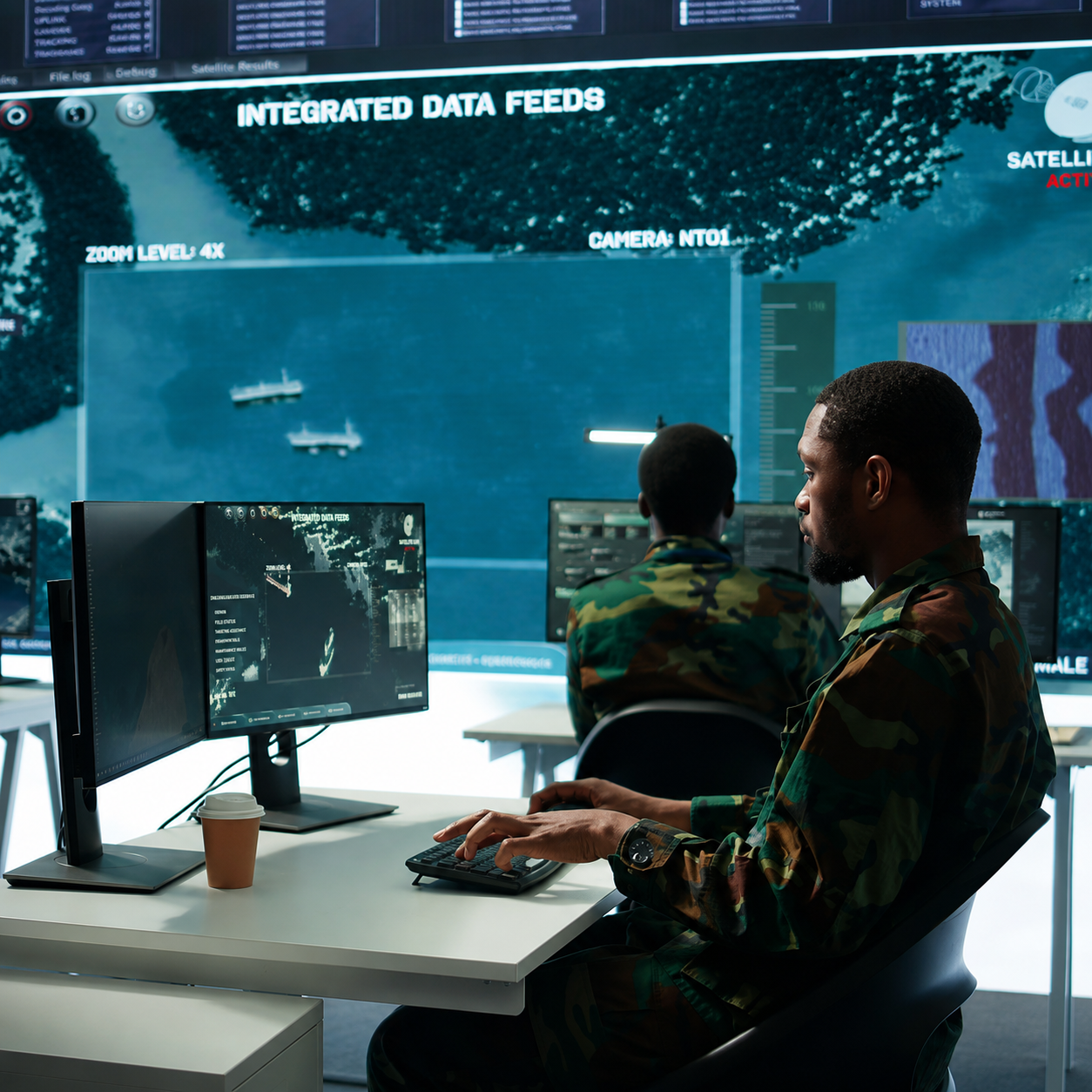
Defense contractor security compliance goes beyond standard commercial security because DOD facilities handle sensitive information, restricted access areas, and government oversight that most businesses never encounter. A general-purpose security installer may understand cameras and door locks, but working with defense contractors requires a provider with a documented history in that specific environment. Cobalt FTS serves top-tier Department of Defense contractors and entities as part of its client base across North Texas.
People Also Ask
Why do defense contractors need a different level of security than typical businesses?
Defense facilities handle sensitive information and restricted areas that require precise access tracking, continuous monitoring, and a security provider with direct experience in high-security environments, rather than a general commercial installation.
What should a defense contractor look for in a security systems provider?
A defense contractor should confirm the provider is state-certified, uses its own in-house technicians rather than subcontractors, and has documented experience securing similarly regulated or high-security facilities.
What Makes DOD Facility Security Requirements Different
Regulated industry security systems, in general, need to do more than deter theft. For a defense facility, a security system also has to support strict access control, maintain detailed records of who entered a space and when, and integrate cleanly with a facility’s broader operational and network infrastructure. That’s a meaningfully different bar than a typical commercial building faces.
A few factors separate DOD facility security requirements from standard commercial security:
- Higher access control precision – tracking exactly who accessed a restricted area, and when, rather than general building entry
- Integration with existing infrastructure – security systems need to connect into a facility’s network without creating new vulnerabilities
- Long-term reliability expectations – defense facilities need a provider available for ongoing maintenance, not a one-time installer
- Documented industry experience – working with sensitive facilities requires a provider that already understands this environment, not one learning on the job
Why State Certification and In-House Technicians Matter Here
Defense contractor security compliance depends heavily on knowing exactly who is designing, installing, and maintaining a facility’s security systems. We are a state-certified security integration company, and we handle design, installation, and maintenance through our own in-house technicians rather than subcontracting any part of the work. For a defense facility, that distinction matters more than it would for a typical office building — every technician with access to the system is someone the client can identify and hold accountable, rather than a rotating cast of subcontracted vendors.
Access Control as the Foundation of Defense Facility Security
Access control sits at the center of any defense facility’s security posture. Our access control solutions are built to securely manage entry points such as doors, gates, and restricted areas, with the adaptability to scale across a single building or a multi-building campus. Because these systems are IP-based, they integrate directly into a facility’s existing network rather than requiring an entirely separate wiring setup, which matters for facilities that already operate under strict IT and infrastructure controls.
Video surveillance and intrusion detection add further layers on top of access control. Our intrusion detection systems are built to monitor assets 24 hours a day, and our video surveillance systems are designed to give ownership and staff total visibility into a facility, both of which support the kind of continuous oversight that regulated, high-security environments require.
Integration Across a Defense Contractor’s Full Facility
Defense facilities rarely run as a single, simple building. Many operate across multiple structures or sites, which is where integrated systems and multi-site security solutions come into play. We design our systems to connect access control, video, and network-integrated security into one system, giving a defense contractor centralized oversight rather than a patchwork of standalone tools across different buildings.
This kind of integration also supports the seamless system integration we position as a core differentiator, connecting critical security systems into a client’s network to provide streamlined, secure operations, whether that client is a hospital, a school, or a defense facility.
Choosing a Security Provider for a Defense Facility
Not every commercial security provider has direct experience with defense contractors, and that experience gap shows up quickly once a system is in place. We’ve worked with schools, healthcare facilities, defense contractors, and manufacturers throughout North Texas since 1998, building systems around how a facility actually operates rather than repeating a one-size-fits-all install across every client type. For a defense contractor, that history translates into a provider that already understands the stakes involved before the first camera is even mounted.
Request a walkthrough of how our security systems support defense facility requirements.